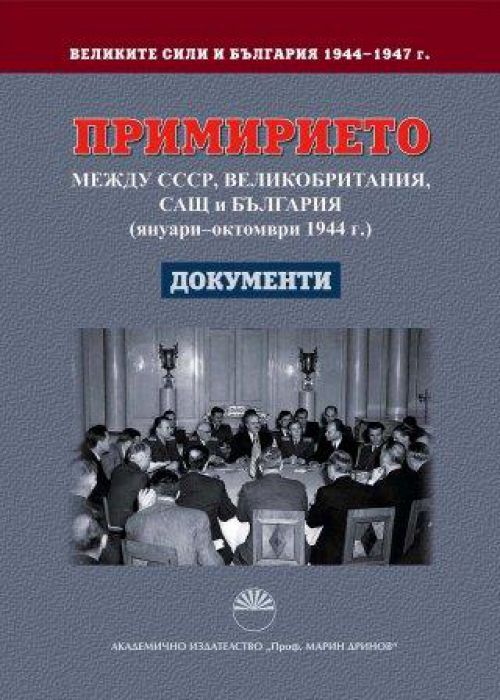
Summary
70 years ago, after the radical changes in the military-strategic situation that occurred in the summer and autumn of 1944 in favor of the anti-Hitler coalition, Bulgaria was faced with the need to seek an opportunity for a more painless exit from World War II. Since the summer of 1943, the “Big Three” (the USSR, Great Britain and the USA) had been developing long-term plans for the post-war structure of the world and for the principles that they should follow when ending hostilities with the European countries that were members of the Axis. The events related to Bulgaria are an example of this.
The first volume, "The Armistice between the USSR, Great Britain, the USA and Bulgaria (January–October 1944)" of the two-volume documentary collection "The Great Powers and Bulgaria. 1944–1947", publishes documents that reveal the negotiation process and the development of the conditions for signing an armistice between the Allied Powers and Bulgaria from the beginning of March to October 22, 1944. The versions of the armistice prepared by Great Britain and the USA (independently and jointly) in the period March–August 1944, and by the USSR – after September 9, 1944, are published. The collection contains discussions between the Allies on individual clauses of the armistice, in particular regarding the withdrawal of Bulgarian troops from Greek and Yugoslav territory, the participation of the Bulgarian army in military operations against Germany and the recognition of Bulgaria as a belligerent country, as well as regarding the responsibility of the three countries in exercising control. on the implementation of the Armistice Agreement, on the leadership (chairmanship) of the Allied Control Commission, etc. The atmosphere in which the negotiations were conducted is conveyed, the serious contradictions between the allies that arose during the discussion of the terms of the armistice are shown in connection with the aspiration of each side to strengthen its opportunities for influence in post-war Bulgaria.