en
en Български
SubTotal: 0.00 BGN
This site uses cookies to help give you the best possible user experience. By continuing to browse this site you give consent for cookies to be used!
+359 2 9793413
sales@aph.bas.bg

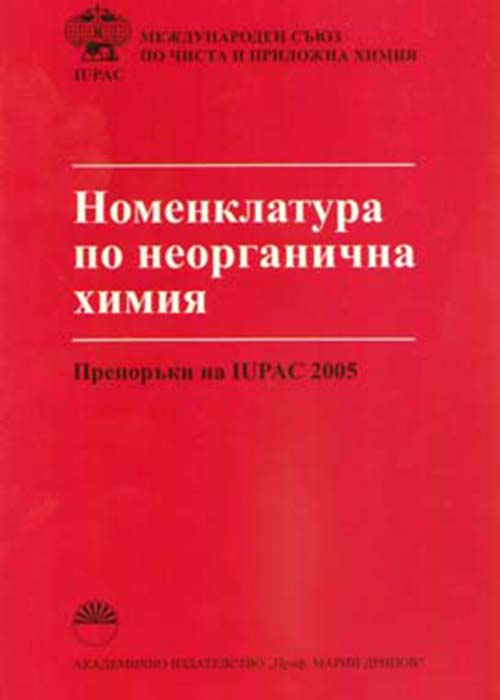
Номенклатура по неорганична химия
Препоръки на IUPAC 2005
Hristo Balarev
10 item(s) in stock
Year of Publication: 2009
Cover Type: Hard
Category: General and Inorganic Chemistry
Edition: First Edition
Pages: 412
Format: 6x8.4x1
Language: Bulgarian
Summary
Аbout The Author
Specifications
ISBN: 978-954-322-330-5
Year of Publication: 2009
Category: General and Inorganic Chemistry
Edition: First Edition
Language: Bulgarian
Cover Type: Hard
Pages: 412
Weight (kg): 1.500 kg
Format: 6x8.4x1
Width (mm): 60
Height (mm): 84
Тhickness (mm): 10
Recently Viewed Books