en
en Български

SubTotal: 00.00 BGN
This site uses cookies to help give you the best possible user experience. By continuing to browse this site you give consent for cookies to be used!
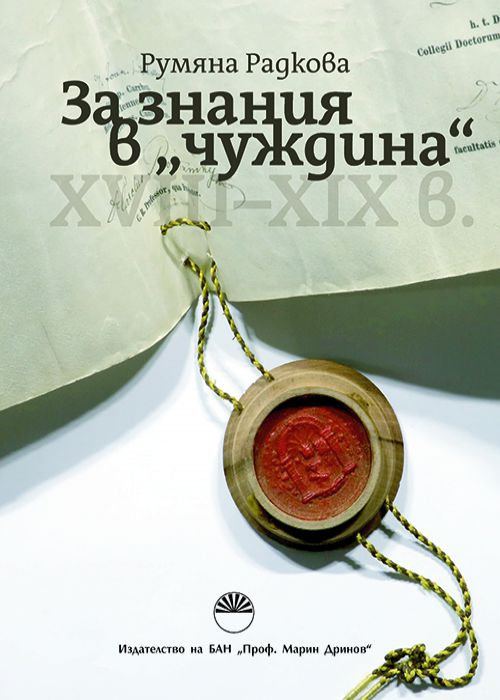
For knowledge in "foreign lands" (18th-19th centuries)
Rumyana Radkova
10 item(s) in stock
Year of Publication: 2019
Cover Type: Hard
Category: History
Edition: First Edition
Pages: 456
Format: n/a
Language: Bulgarian
Summary
Using original sources, the book examines the mechanisms for informing Bulgarian society, given the communications and isolation of the Ottoman Empire at the time, about the programs, conditions for admission, necessary funds, etc., in schools outside their native lands. The sources of support and the amounts needed for education in schools in different cities are analyzed. The journey of Bulgarian children, young men, and young women to the respective countries, which sometimes lasted for months, is described. The emotional and psychological shock of young people from the backward oriental province upon their first encounter with the new environment, way of dressing, cuisine, and educational requirements is presented. The Bulgarian children have to adapt and find their place in the new conditions. They make enormous efforts to learn the foreign language and catch up on their education and, especially, their upbringing. Their young bodies find it difficult to withstand the stress and, in some countries, the harsh climate, and many of them fall ill and die. Despite the enormous difficulties and hardships, the Bulgarians managed to get involved in the work of European Slavic scholars, to acquaint the foreign public with the past of their people, their language, way of life, culture, and contemporary political ambitions, and to defend their place in European culture.
Аbout The Author
Specifications
ISBN: ISBN978-954-322-9796
DOI: n/a
Year of Publication: 2019
Category: History
Edition: First Edition
Language: Bulgarian
Cover Type: Hard
Pages: 456
Weight (kg): 0.950 kg
Format: n/a
Width (mm): /n/a
Height (mm): /n/a
Тhickness (mm): /n/a
Recently Viewed Books