en
en Български

SubTotal: 00.00 BGN
This site uses cookies to help give you the best possible user experience. By continuing to browse this site you give consent for cookies to be used!
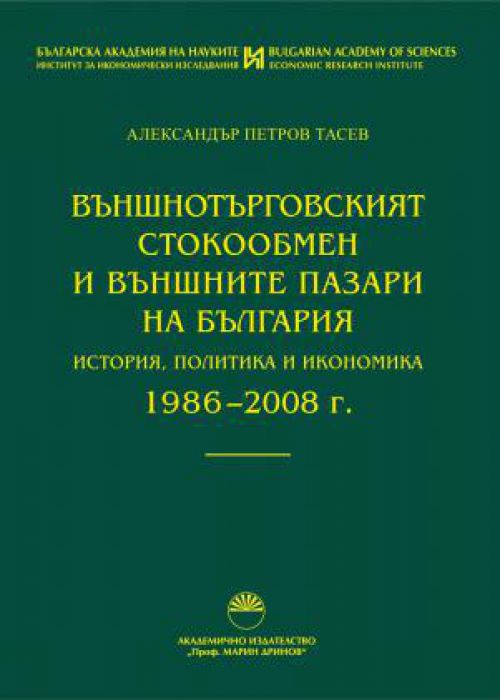
Bulgaria's Foreign Trade and Foreign Markets
History, Politics, and Economics 1986–2008
Aleksandar Tasev
10 item(s) in stock
Year of Publication: 2012
Cover Type: Hard
Category: Economics
Edition: First Edition
Pages: 304
Format: n/a
Language: Bulgarian
Summary
This monograph presents a comprehensive study of Bulgaria’s foreign trade, covering the period from the last socialist five-year plan, through the transition to a market economy, and the first two years of EU membership. The data and its analysis are unlikely to please many politicians.
The author examines trade as an indicator of the potential of the industrial and agricultural sectors and, from this perspective, assesses the export potential of their production. The export structure is analyzed in terms of the share of goods with high, medium, and low value added. The study highlights the Bulgarian economy’s heavy dependence on imports of energy resources, raw materials, and other materials. Foreign trade is presented both in aggregate and by regional groupings and countries. Special attention is given to the free trade agreements concluded and their results. A major strength of the study is its emphasis on the political factor. The author’s analysis shows that the sixteen political-economic factors he identified were decisive for Bulgaria’s negative economic and social development during the period 1986–2008.
Аbout The Author

Specifications
ISBN: 978-954-322-511-8
DOI: n/a
Year of Publication: 2012
Category: Economics
Edition: First Edition
Language: Bulgarian
Cover Type: Hard
Pages: 304
Weight (kg): 1.100 kg
Format: n/a
Width (mm): /n/a
Height (mm): /n/a
Тhickness (mm): /n/a
Recently Viewed Books