Summary
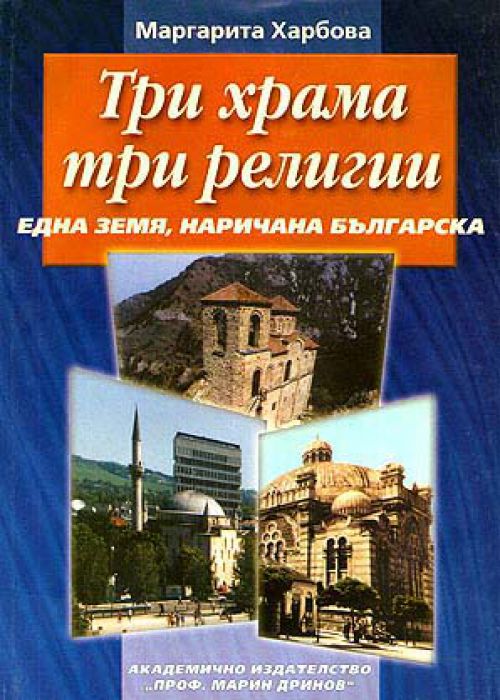
The book also gives us the opportunity to look into the temple of the "other": for Christians - in the mosque and synagogue; for Orthodox - in the Catholic and Protestant cult building; for Muslims - in the Christian and Jewish churches. The knowledge of matter and light, of the place of the symbol and the impact of space transformed the spirit of the times, the magic of art - this is the code for revealing and "reading" the language of the temple regardless of the religious affiliation of the worshipers. This is the architectural language that makes a person empathize with the great mystery and communication with God regardless of the religion for which the temple was originally built. In a certain historical period, pagan cult buildings were rebuilt into Christian ones; Christian - into Islamic ones; Islamic - into Christian ones. The spiritually consecrated place retains its potential, its spiritual radiance. In the architectural image of the new cult building, new accents stand out, they impose themselves as dominants in the settlement environment: a bell tower or a minaret of a mosque, as well as the dome - a symbol of heaven. The building marks the center of the commercial center or the neighborhood, distinguished by ethnic and religious characteristics (Christian, Muslim, Jewish). The temple in the New Age must also take its place as a compositional center in the settlement environment, by incorporating the tradition of the new worldview, by discovering new forms that enrich the human spirit through beauty as a symbol and spiritual radiance. The architecture of the temple has its own unwritten laws, its own secrets. The spirit of our time seeks its new image in the temple. In order to discover it, we must know the path taken to this day by cult construction in the Bulgarian lands, its specificity, the stability of tradition, the mystery and the spiritual radiance of the "holy place".