en
en Български

SubTotal: 00.00 BGN
This site uses cookies to help give you the best possible user experience. By continuing to browse this site you give consent for cookies to be used!
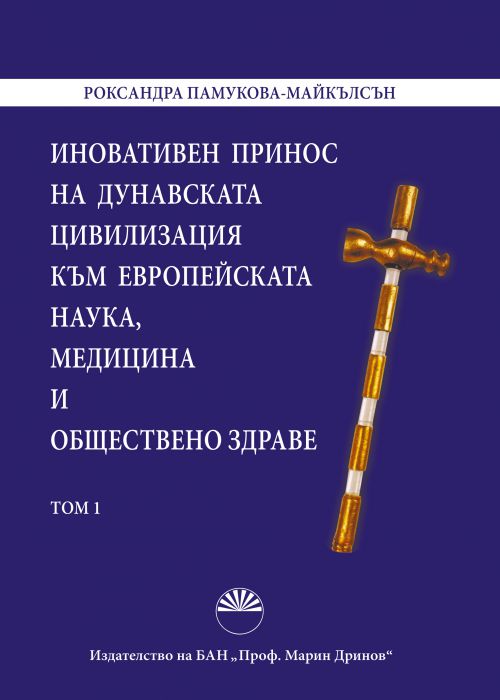
THE INNOVATIVE CONTRIBUTION OF THE DANUBE CIVILIZATION TO EUROPEAN SCIENCE, MEDICINE, AND PUBLIC HEALTH
Series: In Search of Health, Eternal Youth, and Immortality – An Innovative Contribution by the Thraco-Pelasgian Civilizations, VOLUME I
Roxandra Pamukoff-Michelson
Summary
The Thraco-Pelasgians established an innovative, highly developed culture in the Balkans and neighboring regions, known as the Danube civilization. According to current data, it emerged in the 7th millennium BCE. Researchers have defined this era as the “golden millennia,” during which the foundations of the earliest empirical sciences in Europe were laid, including medicine, urban planning, hygiene, and public health.
Hundreds of literary sources from antiquity to the present day, as well as thousands of artifacts discussed in the book, confirm the significant contribution of the Thraco-Pelasgians to the progress of European civilization and medicine.
Contemporary studies, presented in detail, demonstrate that the medicine of the Thraco-Pelasgians and, later, of the Bulgarians, represents the longest-standing practical tradition in Europe.
Hundreds of literary sources from antiquity to the present day, as well as thousands of artifacts discussed in the book, confirm the significant contribution of the Thraco-Pelasgians to the progress of European civilization and medicine.
Contemporary studies, presented in detail, demonstrate that the medicine of the Thraco-Pelasgians and, later, of the Bulgarians, represents the longest-standing practical tradition in Europe.
Аbout The Author
Specifications
ISBN: 978-619-245-111-0
DOI: n/a
Year of Publication: 2021
Category: Biomedicine and Quality of Life
Language: Bulgarian
Recently Viewed е-Books