en
en Български

SubTotal: 00.00 BGN
This site uses cookies to help give you the best possible user experience. By continuing to browse this site you give consent for cookies to be used!
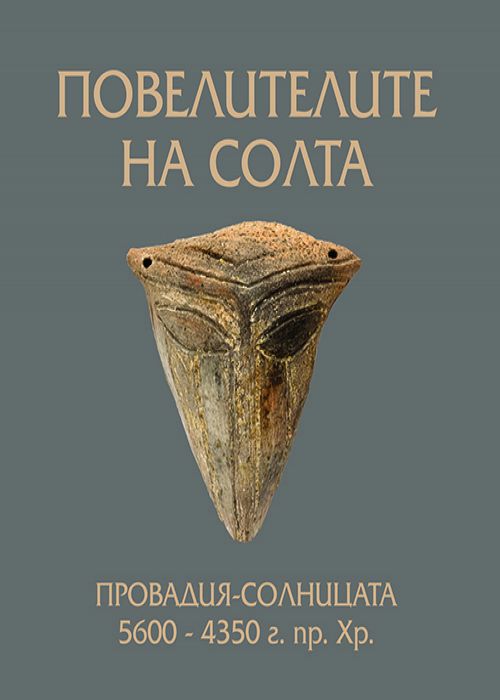
THE RULERS OF SALT: PROVADIA-SOLNITSA 5600 - 4350 BC.
Exhibition marking 20 years of archaeological research on the oldest prehistoric settlement and urban center
Kolektiv
10 item(s) in stock
Year of Publication: 2024
Cover Type: Soft
Category: Cultural-Historical Heritage and National Identity
Edition: First Edition
Pages: 200
Format: n/a
Language: Bulgarian
Summary
Provadia-Solnitsata is a very large prehistoric complex near the modern town of Provadia in
northeastern Bulgaria, close to Varna. It was established and inhabited by the earliest producers of
cooking salt in Europe during the 6th and 5th millennia BC. Throughout most of late prehistory, these people held a monopoly on salt across a vast region stretching from the Danube River to the White Sea and from the Black Sea to the Central Balkans. And since without salt the life of every animal organism, as well as that of humans, is impossible, salt producers were very wealthy thanks to long-distance trade. The specialized production of table salt caused significant social changes, including a clear hierarchy in society in the region of the lower reaches of the Provadia River and the Varna Lakes, as evidenced by the Varna "golden" necropolis. In fact, according to current data, it appears that this region was the first in Europe to develop a complex prehistoric society, with Provadia-Solnitsata emerging as the first prehistoric urban center on the old continent. Therefore, this archaeological complex, covering an area of about 300 decares, is of exceptional interest for the history of early agricultural antiquity.
Аbout The Author
- • Kolektiv
Specifications
ISBN: 978-619-254-037-1
DOI: n/a
Year of Publication: 2024
Category: Cultural-Historical Heritage and National Identity
Edition: First Edition
Language: Bulgarian
Cover Type: Soft
Pages: 200
Weight (kg): 0.750 kg
Format: n/a
Width (mm): /n/a
Height (mm): /n/a
Тhickness (mm): /n/a
Recently Viewed Books