Summary
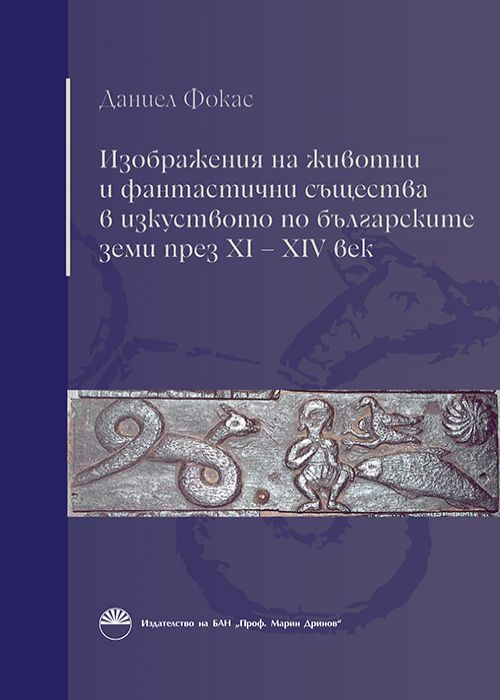
This work deals with the entire body of such motifs represented in cultural monuments across the Bulgarian lands dating from the 11th through the 14th century, one of its key objectives being to outline the different groups, scenes and compositions, while also identifying the various beasts, both real and phantasmic, and describing their basic formal variants. Based upon that, the book will seek to formulate a typology whenever the available material allows that. Also analyzed are their stylistic features with a view to enabling a classification of the images. Another key point of research is the symbolic value of zoomorphic motifs, the origin and the reasons for its introduction into the visual language of Christian art. This is the subject matter of the first chapter of the book, which reviews the literary sources dealing with that branch of the visual arts. The chapter explores the reasons for the presence and establishment of zoomorphic symbolism in the mediaeval art of the Christian peoples. The study accentuates that process which originated in Byzantium and was adopted without significant modifications in mediaeval Bulgaria. The next objective, addressed in the second chapter of the book, has been to identify and present in a systematic manner any existing zoomorphic motifs; to propose possible interpretations for their symbolic meaning and the reason for its existence; to establish their purpose in a cultural environment: whether as decoration, as a secular marker (charge or heraldic symbol), or with some apotropaic (protective) function. Another research question that the second chapter seeks to answer concerns the identification and interpretation of scenes and compositions for which the available scientific literature offers no ready explanation. The book’s ultimate ambition is to provide a comprehensive study and systematic classification of the iconography, to the extent made possible by the available body of visual imagery, while sorting out the symbolic meanings of zoomorphic motifs and, in conclusion, proposing an evaluation of their prevalence and significance for the visual arts in the Bulgarian lands. In support of that, the author has complied and enclosed a catalog, and as a final product, a repertory of zoomorphic images classified by type and by the artefacts on which they appear.